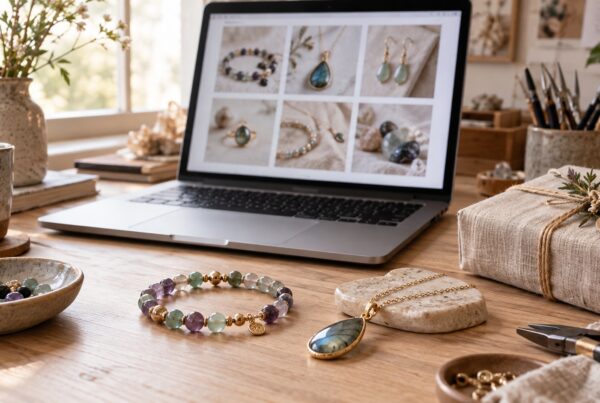
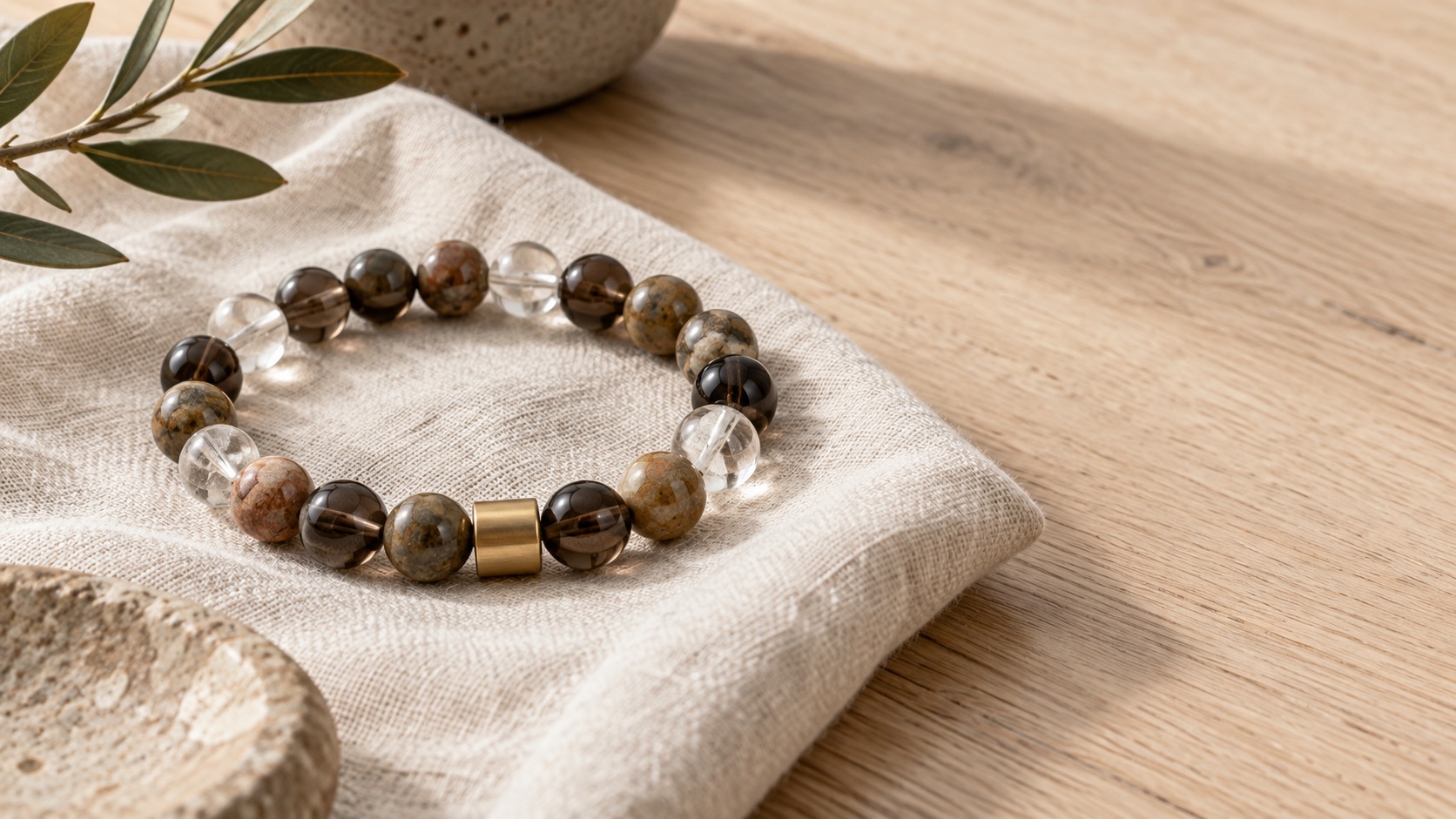
A natural stone bracelet is at its best when material, proportion, and craftsmanship feel quietly resolved. The appeal begins with the stone itself: subtle shifts in color, fine mineral patterns, and a cool, tactile weight that makes each piece distinct. Yet appearance is only part of the decision. Fit, bead scale, construction, disclosed treatments, and care requirements all influence how comfortably and confidently a bracelet can be worn.
This guide offers a practical way to compare natural stone bracelets without relying on exaggerated promises. It explains what to look for in the material, how to assess the making, how to measure for fit, and how to approach traditional symbolism with perspective. The aim is not to find a supposedly perfect stone. It is to choose an object whose qualities, story, and presence feel right for daily life.
What Is a Natural Stone Bracelet?
A natural stone bracelet is jewelry made with mineral material formed in nature and shaped for wear. Depending on the design, the stone may appear as polished round beads, softly faceted forms, smooth discs, irregular chips, or individually set elements. Common examples include varieties of quartz, agate, jasper, tiger's eye, onyx, and other decorative stones.
The phrase “natural stone” describes origin, not necessarily an untouched condition. Stone must be cut, drilled, shaped, and polished before it can become a bracelet. Some material may also be heated, dyed, stabilized, coated, or otherwise treated to alter its appearance or durability. A responsible product description should distinguish the stone from laboratory-created or imitation material and disclose relevant treatments.
This distinction matters because a bracelet is both an aesthetic object and a material one. The name of a stone is useful, but it does not tell the whole story. Finish, treatment, construction, bead matching, and the quality of the cord or findings all shape the final piece.
Why Natural Variation Matters
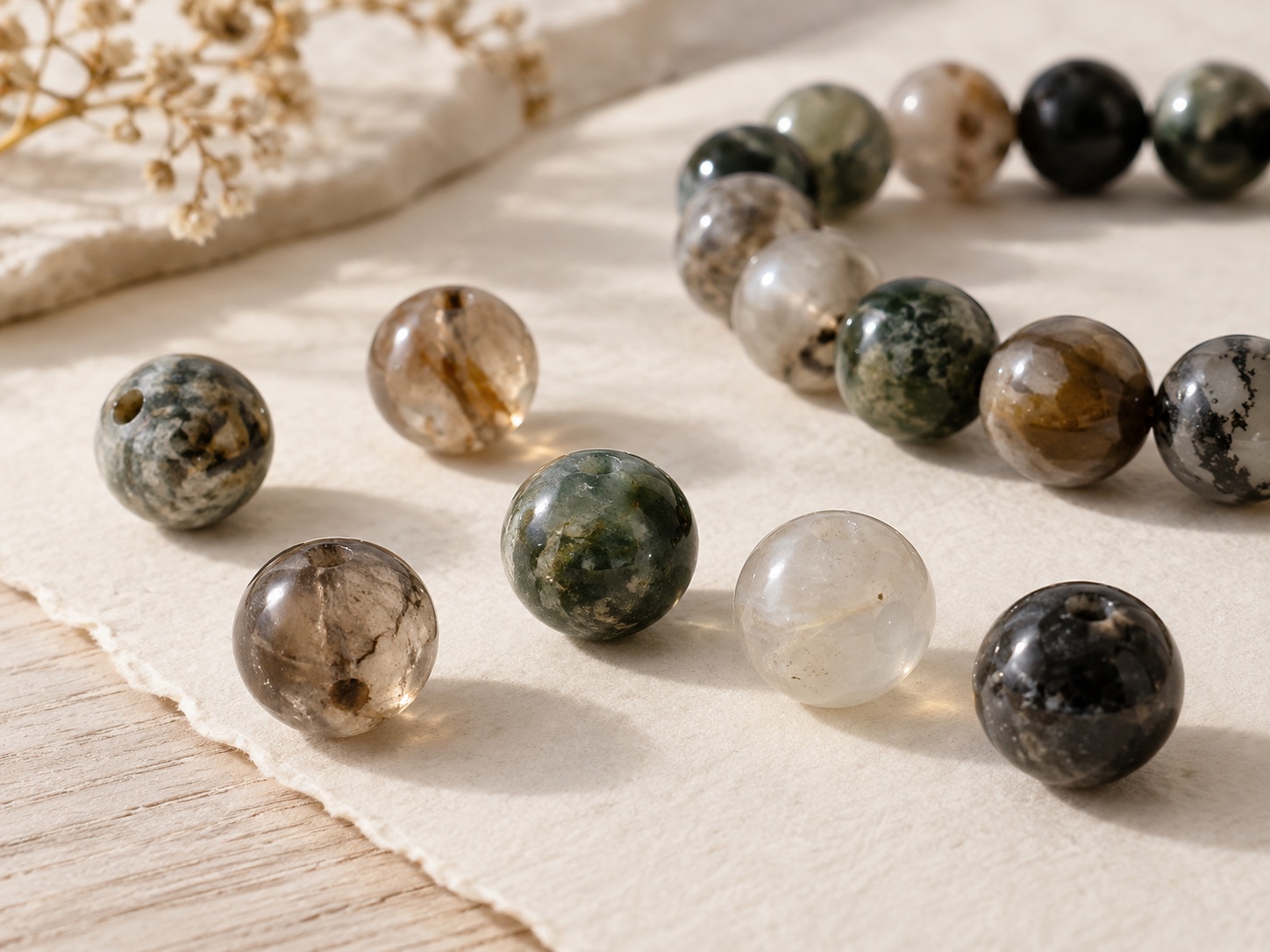
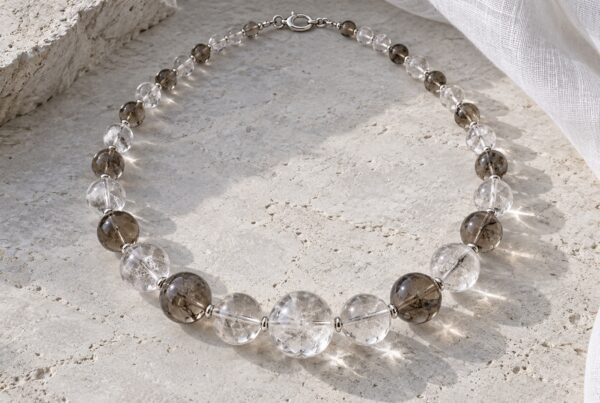
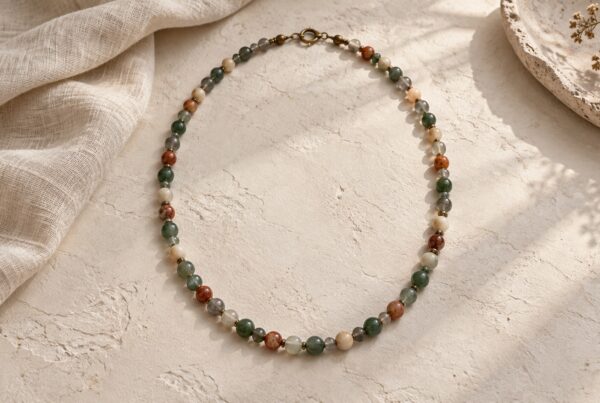
Natural stone rarely repeats itself exactly. Two beads from the same material can differ in tone, translucency, banding, veining, inclusions, or surface character. These variations are not automatically defects. They are often part of what gives a natural gemstone bracelet its depth and individuality.
Variation should still feel intentional within the design. A refined bracelet may use closely matched beads for a calm, continuous rhythm, or deliberately arrange contrasting markings to create movement. What matters is that the composition appears considered rather than accidental.
Product photography should show this honestly. Look for clear images in neutral light, including close views and a photograph on the wrist. Images that are heavily filtered or dramatically lit can make color difficult to judge. When buying online, it is reasonable to ask whether the photographed piece is the exact bracelet or a representative example, especially when the stone has expressive patterning.
How to Choose a Natural Stone Bracelet
The most satisfying choice usually comes from balancing five elements: material, proportion, construction, fit, and meaning.
Begin with the material
Start with what can be observed and explained. Does the product page name the stone clearly? Does it mention known treatments? Are the color and surface shown in ordinary light? If metal spacers, charms, or clasps are present, are those materials identified as well?
Consider how the bracelet will be worn. A piece intended for frequent use may need a stone and finish suited to regular contact with desks, sleeves, bags, and other jewelry. More delicate, porous, layered, or fracture-prone materials can still be beautiful, but they may call for gentler wear. Because care varies by gemstone, the seller should provide guidance for the specific material rather than a universal cleaning claim.
Consider bead size and proportion
Bead diameter changes both appearance and feel. Smaller beads tend to create a restrained line around the wrist and layer easily with a watch or fine bracelet. Larger beads have more visual presence and may feel heavier or fit more closely because they occupy more space along the bracelet's inner curve.
Proportion matters more than a gendered label. A slim wrist may suit a bold bead if that is the desired expression, while a broader wrist can look elegant with smaller, precisely finished beads. The decision is personal: consider the scale of the bracelet in relation to the hand, watch, sleeve, and other jewelry you wear most often.
Look closely at construction
In a beaded bracelet, craftsmanship is visible in small details. Drill holes should be clean and aligned. Beads should sit with an even rhythm. Metal elements should feel integrated into the composition, and any edges touching the cord should be smooth.
A stretch bracelet offers ease and an uninterrupted silhouette. Its cord, however, is a working component that will age with repeated tension, moisture, heat, and wear. A clasp bracelet can provide a more tailored structure but should open securely and feel balanced against the weight of the stones. Neither construction is inherently superior; the better choice is the one made well and suited to the wearer.
Choose the right fit
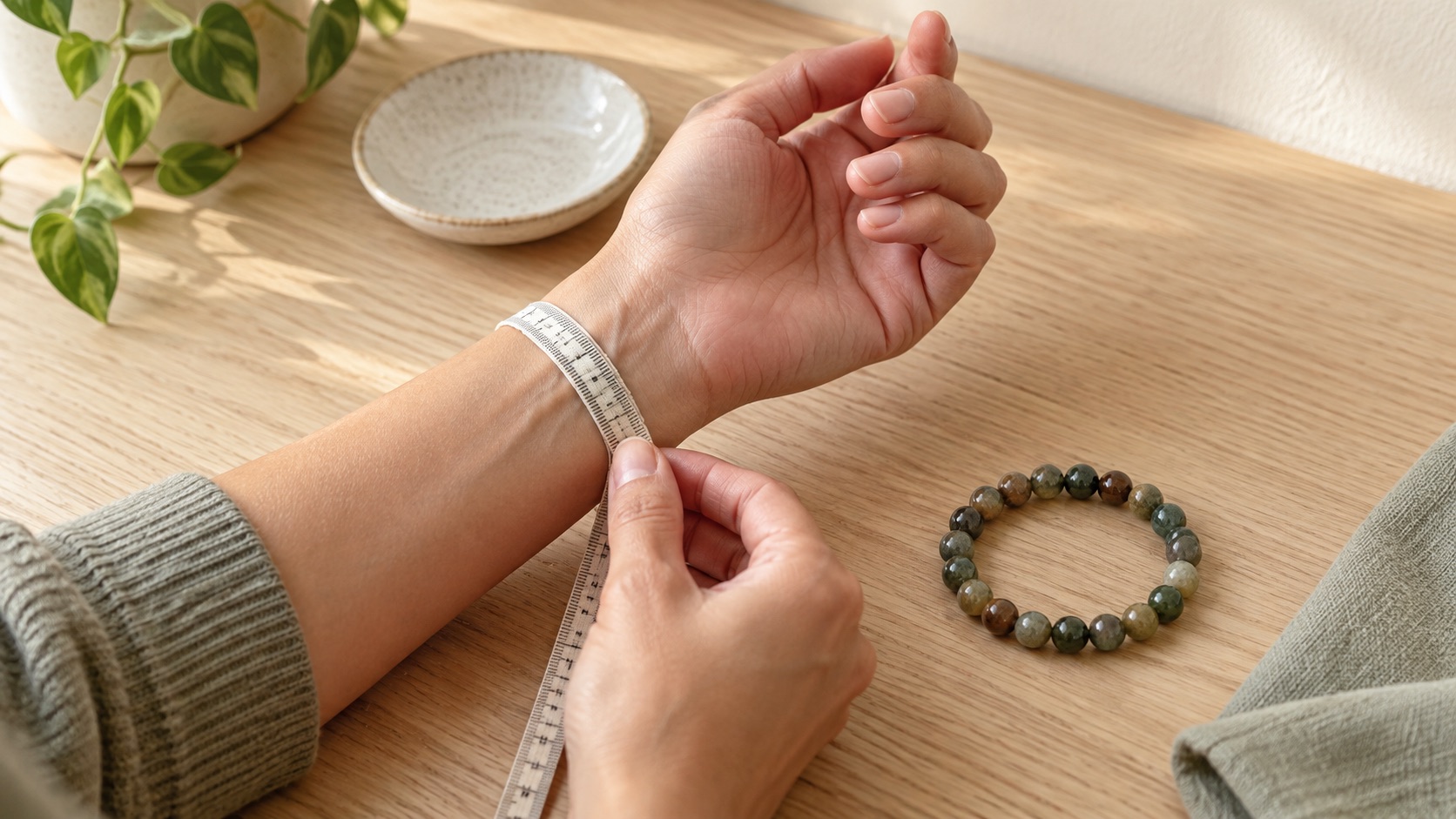
Measure the wrist where the bracelet will sit using a flexible tape. If one is not available, wrap a non-stretch ribbon or strip of paper around the wrist, mark the meeting point, and measure it against a ruler.
Then consult the sizing method for the exact product. Some makers state the bracelet's inner circumference, while others list the wrist size it is designed to fit. These measurements are not always interchangeable. Bead diameter and construction can also change the usable interior space.
A close fit feels neat and moves very little. A relaxed fit allows gentle movement without sliding over the hand. When between sizes, ask the maker how the design is measured rather than relying only on a general small, medium, or large label.
Let meaning remain personal
Stone jewelry often carries layers of cultural symbolism, family association, color meaning, or personal memory. Some people choose a bracelet because a stone is traditionally associated with calm, courage, affection, or reflection. Others are drawn simply to its color and material character.
These meanings can enrich an object without becoming a promise. Symbolic associations should be understood as cultural or personal, not as scientifically established healing, protection, luck, or a guaranteed change in circumstance. A bracelet can serve as a private reminder of an intention because the wearer gives it that role.
Natural, Treated, Synthetic, and Imitation Materials
Clear terminology helps a buyer understand what is being offered.
- Natural stone originates in nature, then is cut and finished for jewelry.
- Treated stone is natural material whose color, clarity, stability, or appearance has been altered by a process beyond routine cutting and polishing.
- Laboratory-created or synthetic stone is manufactured but may share chemical, physical, or optical properties with a natural counterpart.
- Imitation material resembles a named stone in appearance but does not share its essential material identity; colored glass is one possible example.
Treatment is not automatically a sign of poor quality. Many treatments are established within the jewelry trade. What matters is accurate description, relevant disclosure, and care information. In the United States, the Federal Trade Commission advises sellers to disclose treatments when they are not permanent, create special care requirements, or significantly affect value.
Visual inspection alone cannot reliably identify every treatment or imitation. Color that looks unusually uniform or saturated may justify a question, but it is not proof. For a higher-value purchase, seek detailed documentation or an independent gemological opinion rather than relying on informal tests.
How to Recognize Thoughtful Craftsmanship
Luxury in a natural stone bracelet is less about ornament and more about resolution. A well-made piece feels coherent from every angle.
Look for:
- clean, centered drill holes and a consistent polish;
- intentional matching or sequencing of natural variations;
- balanced spacing without exposed gaps or excessive tension;
- smooth spacers and findings that do not abrade the cord;
- a secure clasp or well-finished stretch construction;
- clear material, sizing, and care information;
- photography that represents texture, scale, and color honestly.
At TAM, natural stone bracelets are approached first as objects of material beauty and personal meaning. The focus rests on proportion, tactile presence, and craftsmanship rather than on supernatural claims. This allows the stone to be appreciated for what can genuinely be seen and felt.
Styling a Natural Stone Bracelet
A single bracelet can become a quiet point of focus. Dark stone against a white cotton cuff feels graphic and architectural. Pale translucent beads soften tailoring and knitwear. Earth-toned jasper or agate sits naturally beside linen, denim, wool, and warm neutral leather.
For a minimal composition, wear one bracelet and allow its material to stand on its own. When layering, vary texture more than color: polished stone beside brushed metal, small beads beside a watch, or matte beads beside a slender chain. Repeating one tone across different materials creates cohesion without making the arrangement feel overly matched.
Practicality matters. Avoid stacking a softer or highly polished stone against sharp metal edges. If you type or work at a desk for long periods, a smaller bead or closer fit may be more comfortable. The bracelet should belong to the rhythm of your day, not compete with it.
How to Care for Natural Stone Bracelets
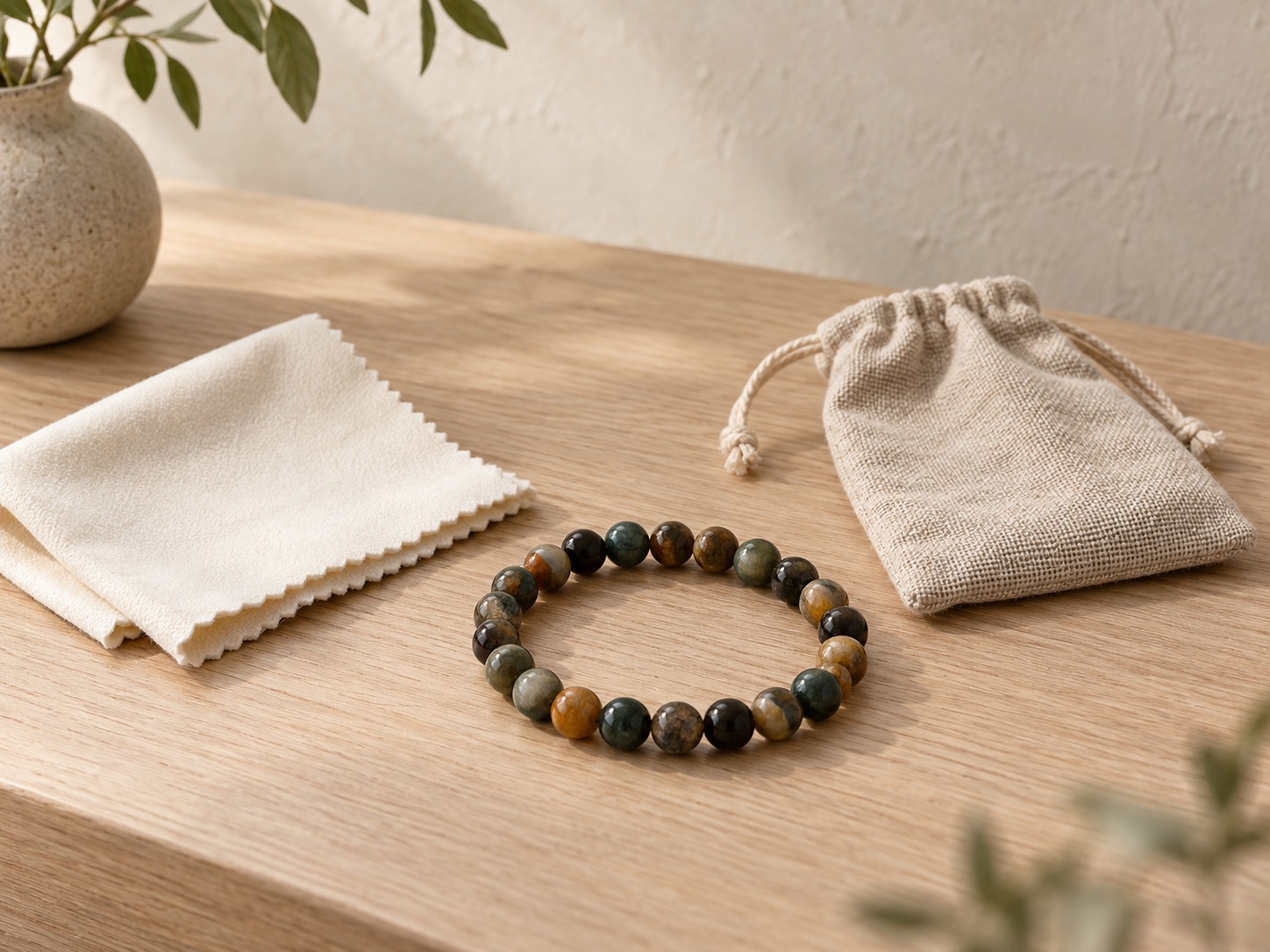
Care should begin with the specific stone and any disclosed treatment. There is no single cleaning method appropriate for every gemstone.
As a cautious general routine:
- remove the bracelet before bathing, swimming, exercise, or household cleaning;
- apply perfume, lotion, and hair products before putting the bracelet on;
- wipe the surface gently with a soft, dry cloth after wear;
- store it separately in a soft pouch or lined compartment;
- avoid prolonged heat, strong sunlight, harsh chemicals, and sudden temperature changes;
- do not use steam or ultrasonic cleaning unless the material guidance expressly permits it;
- roll a stretch bracelet over the hand instead of pulling one section of cord sharply.
Inspect the construction from time to time. Stretching, fraying, loosened knots, or movement around a clasp can signal that restringing or repair is due. Preventive maintenance protects both the stones and the pleasure of wearing them.
Choosing One as a Meaningful Gift
A natural stone bracelet can be a considered gift because it combines usefulness, beauty, and room for personal interpretation. Begin with the recipient rather than a generalized stone meaning.
Notice the colors they wear, whether their jewelry is minimal or expressive, and whether they prefer warm or cool metal tones. Think about daily routine: a discreet bracelet may suit someone who works with their hands, while a sculptural design may appeal to a collector of distinctive objects.
Fit is the most important practical detail. If measuring discreetly is not possible, compare with a bracelet they already own or choose a seller with clear size guidance and an exchange option. A short note can explain why the material or color made you think of them without making promises about what the stone will do.
Presentation should remain simple: a protective pouch or box, a material card, and concise care instructions. Thoughtfulness is most convincing when it is precise.
A Quiet Object for Everyday Life
A natural stone bracelet does not need an extravagant story to hold meaning. Its value may be found in the mineral pattern of each bead, the care of the making, the balance of weight on the wrist, or the memory attached to a gift.
Choose slowly. Ask clear questions about material, treatment, sizing, and construction. Let symbolism be a personal layer rather than a guarantee. When these details align, the bracelet becomes more than an accessory: it becomes an object that feels at home in everyday life.
To continue exploring, visit the TAM Stones collection and compare each design by material, proportion, and the way you hope to wear it.
Frequently Asked Questions
How can I tell whether a natural stone bracelet is genuine?
Begin with the seller's disclosure, not a single visual trick. Look for a clearly named material, any known treatments, close photographs in neutral light, bead dimensions, and appropriate care guidance. Natural variation can be consistent with genuine stone, but appearance alone cannot confirm identity or reveal every treatment. For a high-value item, request documentation or consult a qualified independent gemologist.
Are natural stone bracelets supposed to look different from one another?
Often, yes. Natural stone may vary in color, translucency, veining, banding, inclusions, and surface pattern. The amount of variation depends on the material and the maker's selection process. A good product page should explain that the delivered piece may not be identical to the photographed sample while still representing the overall palette and character accurately.
How should a natural stone bracelet fit?
It should feel secure without pressing uncomfortably into the wrist. Measure where the bracelet will sit and compare that number with the maker's sizing method. Check whether the listed size means inner circumference or intended wrist size. Larger beads reduce interior space, so follow the guidance for the exact design instead of relying only on a standard size label.
Can I wear a natural stone bracelet every day?
That depends on the stone, finish, construction, and your routine. Some materials tolerate regular wear better than others, while certain stones, surface treatments, cords, or settings need more care. Remove the bracelet for bathing, swimming, exercise, and cleaning. Ask for material-specific advice if the product description does not explain suitable use.
Can a natural stone bracelet get wet?
Occasional contact may not harm every stone, but repeated exposure can affect elastic, thread, metal parts, coatings, dyes, and some porous or treated materials. The safest general habit is to remove the bracelet before showering or swimming and follow the maker's care instructions. Avoid assuming that advice for one gemstone applies to all others.
What does a natural stone bracelet symbolize?
Meaning varies across cultures, families, and individuals. A stone may be traditionally associated with a quality or chosen to mark a memory, relationship, or intention. These associations can be emotionally meaningful, but they should not be presented as scientifically established healing, protection, luck, or guaranteed outcomes. Color, craftsmanship, and personal resonance are equally valid reasons to choose a piece.
Is a natural stone bracelet a good gift?
Yes, when the design suits the recipient and the fit is considered. Choose according to their palette, jewelry scale, lifestyle, and preferred materials. Confirm sizing and exchange terms before purchasing. A simple note about why you selected the stone or color gives the gift meaning without relying on exaggerated claims.