A calming stone bracelet is often chosen for its soft color, smooth surface, and association with a quieter pace. Pale blue, muted green, clouded white, and translucent gray can create a gentle visual rhythm on the wrist. The bracelet may become a personal reminder to pause, but it should not be described as a guaranteed treatment for stress, anxiety, sleep, or any medical condition.
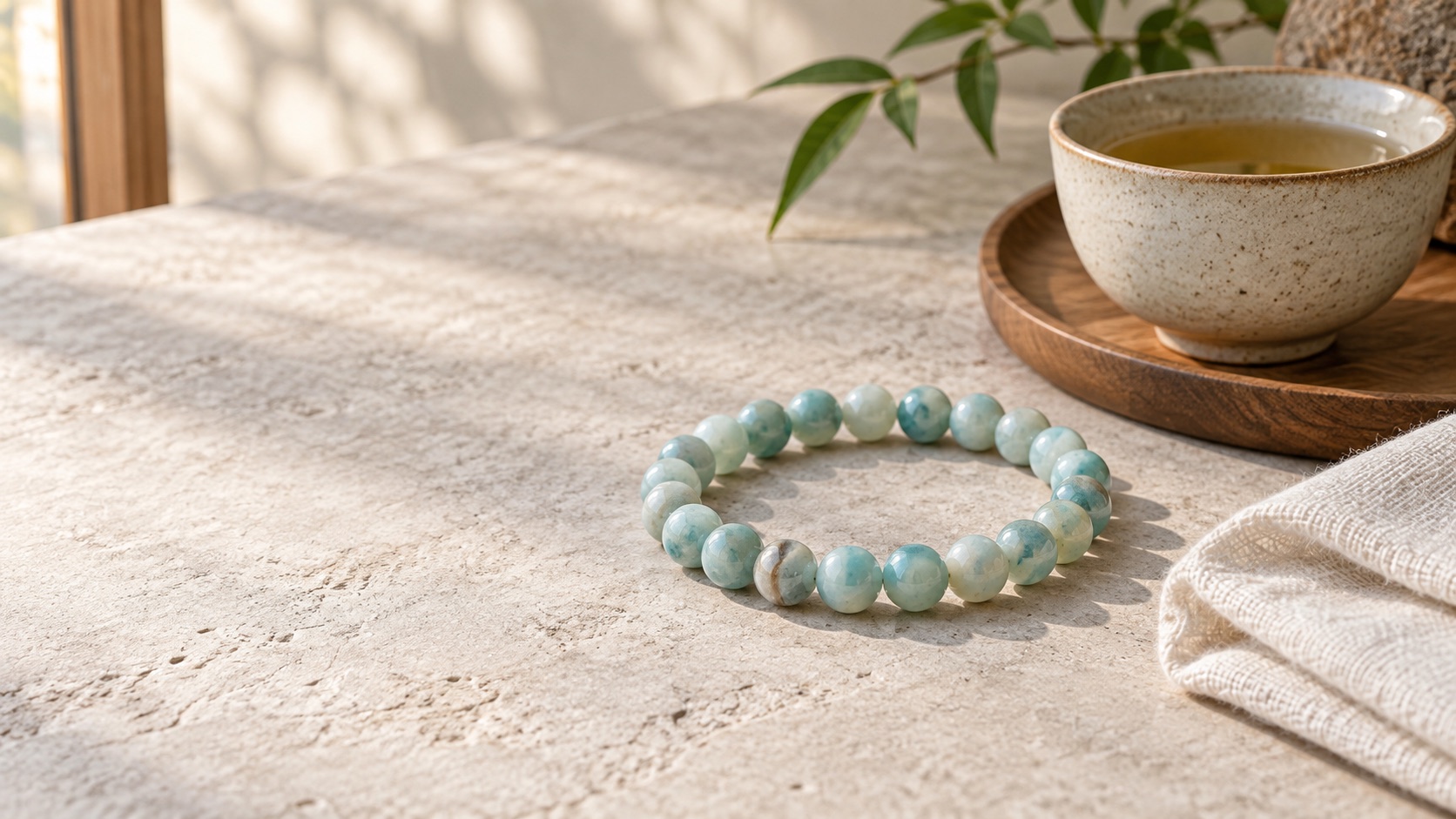
This guide approaches calming stone bracelet through soft visual language and intentional habits without medical or guaranteed claims. It keeps traditional or personal symbolism in perspective and gives practical details priority.
Why Soft Color Feels Quiet
Color influences the atmosphere of an object, though responses remain personal and contextual. Low-contrast palettes tend to feel visually restrained because the eye moves gently between similar tones. Natural clouding and variation prevent the bracelet from becoming flat or artificial.
Choose the color in ordinary light. Pale stones can look much more saturated in edited photographs, while translucent beads may pick up the color of skin, clothing, and surroundings.
Touch as a Personal Reminder
Smooth beads offer a small tactile point of attention. Some wearers use that sensation as a reminder to unclench the hands, take an unforced breath, or step away from a screen. The habit, not a promised force in the stone, gives the gesture its meaning.
If the bracelet becomes uncomfortable or distracting, remove it. A mindful object should support choice rather than create a rule about when or how it must be worn.
Design a Gentle Everyday Piece
Smaller beads and a close but comfortable fit tend to feel discreet. A single pale material creates clarity; a measured mix of blue-green, gray, and clear beads adds depth. Keep metal details restrained so the stone remains the focus.
Pair the bracelet with cotton, linen, soft knitwear, or a simple watch. It can also rest beside a tea tray or journal when not worn, becoming part of a quiet daily arrangement without needing ceremonial language.
How to Judge Materials and Disclosure
A complete product description should name the stone, bead dimensions, construction, metal components, and any relevant treatment. “Natural” identifies origin, while heat, dye, filling, coating, stabilization, and other processes describe what may have happened afterward. Treatment is not automatically negative, but it can affect value, appearance, or care.
The Federal Trade Commission Jewelry Guides explain when gemstone treatments and manufactured alternatives should be disclosed in the United States. The Gemological Institute of America also provides an overview of common treatments and their care implications. Visual inspection alone cannot identify every process, so avoid absolute authenticity claims based on photographs or informal home tests.
Fit, Bead Scale, and Construction
Measure the wrist where the bracelet will sit using a flexible tape or a non-stretch ribbon measured against a ruler. Then read the maker’s sizing method carefully. Some sizes describe the bracelet’s inner circumference; others describe the wrist the piece is intended to fit. These are not always interchangeable, particularly with larger beads.
A close fit moves little and feels visually precise. A comfortable fit allows gentle movement. A loose fit creates more drape but may catch on sleeves, bags, or a desk. Bead diameter changes the interior curve, so compare an on-wrist photograph as well as the written measurement.
For stretch designs, inspect cord tension, knot finishing, and the edges of drill holes. Roll the bracelet over the hand rather than pulling one section sharply. For clasp designs, check that the closure is secure and proportionate to the weight of the stones. Thoughtful construction should feel calm in use, not merely attractive in a still image.
A Practical Buying Checklist
- The stone or material is named clearly.
- Known treatments and special care are disclosed where relevant.
- Photographs show close detail, true scale, and an on-wrist view.
- Bead size and bracelet sizing method are explained.
- Drill holes, cord, knots, findings, and closure appear well finished.
- Natural variation is acknowledged without using it to excuse damage.
- Shipping, returns, repair, and restringing information are available.
- Symbolic language is presented as tradition or personal meaning, not guaranteed fact.
Natural Variation, Damage, and Finish
Natural variation deserves appreciation, but it should not become a vague explanation for every irregularity. Changes in color, translucency, banding, veining, or small internal inclusions can belong to the stone. Sharp chips, unstable fractures, abrasive drill holes, peeling coatings, or a finish that catches on fabric are different concerns. Product photographs and descriptions should help a buyer distinguish material character from workmanship issues.
Matching is also a design choice rather than a simple quality grade. Some bracelets use closely related beads for a continuous, formal rhythm. Others place contrasting natural patterns in a deliberate sequence. Look for visual balance: no single bead should appear misplaced unless it is clearly intended as a focal point. Understated pieces often reveal the most care because every difference remains visible.
Styling and Gifting
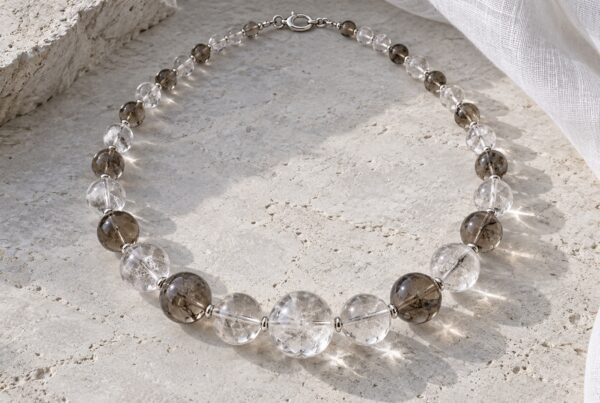
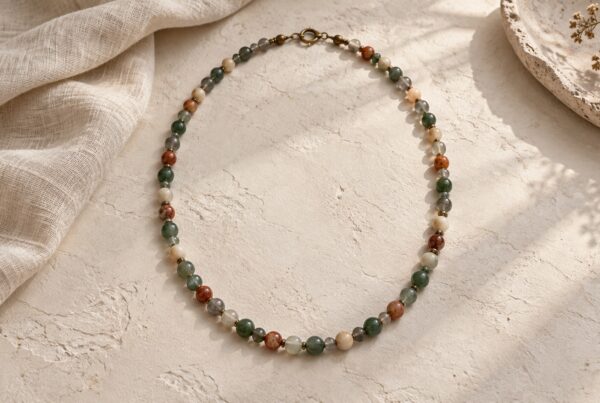
Let the bracelet’s material guide the styling. Clear and pale stones bring light to charcoal, navy, or black clothing. Dark polished beads create definition against white cotton and neutral knitwear. Earth tones sit naturally beside linen, denim, wool, and warm leather. For a restrained composition, wear one bracelet and allow its pattern to remain legible. When layering, combine different textures rather than several competing colors.
For a gift, begin with the recipient’s wardrobe and existing jewelry. Notice whether they prefer small or substantial pieces, warm or cool metal tones, and polished or matte surfaces. Fit matters more than a generalized symbolic meaning. If a wrist measurement is unavailable, compare with a bracelet they already wear or choose a seller with clear exchange options.
Presentation can remain simple: a protective pouch or box, a concise material card, and care guidance. A short personal note can explain why the color, pattern, or craftsmanship brought the recipient to mind. This gives the object emotional meaning without assigning a promised effect to the stone.
Thoughtful styling begins with observation, allowing the material to complement the wearer rather than dominate them.
How to Care for the Bracelet
Care should follow the exact stone and treatment. As a cautious general routine, remove the bracelet before bathing, swimming, exercise, or household cleaning. Apply perfume, lotion, and hair products first, then put on the bracelet after they have dried. Wipe the beads gently with a soft, dry cloth after wear.
Store the piece separately in a fabric pouch or lined compartment so it does not strike harder jewelry. Avoid prolonged heat, strong sunlight, sudden temperature changes, and harsh chemicals. Do not use steam or ultrasonic cleaning unless guidance for the specific materials expressly allows it. Inspect elastic, thread, knots, and clasps periodically; timely restringing protects the stones.
Choosing Meaning Without Overstatement
Gemstones can carry cultural stories, family associations, color symbolism, or memories of a particular person and time. Those meanings can make jewelry intimate. They should be described with context and humility. A bracelet cannot responsibly be promised to heal, protect, attract money, change destiny, or guarantee an emotional state.
At TAM, stone bracelets are considered first as objects of natural beauty, craftsmanship, and personal meaning. The most enduring choice is often the one whose material, proportion, and story already feel at home in the wearer’s life.
Frequently Asked Questions
How do I know whether this calming stone bracelet is authentic?
Start with a specific product description, treatment disclosure, close photographs, and seller transparency. Natural variation may support the description, but it is not proof. Home tests cannot reliably identify every natural, treated, synthetic, or imitation material. For a higher-value purchase, request documentation or an independent gemological opinion.
What bead size is best for everyday wear?
There is no universal best size. Smaller beads usually feel discreet and layer easily, while larger beads show more mineral detail and carry greater weight. Consider wrist scale, desk work, sleeves, and whether the bracelet will be worn beside a watch. Always compare the actual dimensions and on-wrist photographs.
Can I wear it in water?
The safest general answer is to remove it first. Repeated water exposure can affect elastic, thread, metal findings, coatings, dyes, and some porous or treated stones. Follow care guidance for the exact materials rather than assuming that advice for one gemstone applies to another.
Do the stones have guaranteed spiritual or emotional effects?
No. Traditional associations and personal symbolism may be meaningful, but they are not scientifically established guarantees of healing, protection, luck, calm, grounding, or another outcome. Choose a bracelet for its material, craft, beauty, and the intention you personally connect with it.
Is it suitable as a gift?
Yes, when color, scale, fit, and lifestyle are considered. Check the recipient’s existing jewelry and, if possible, measure a bracelet they already wear. Choose clear exchange terms when sizing is uncertain. A short note about why the material or design reminded you of them adds meaning without making claims.
Choose Slowly
A calming stone bracelet is most rewarding when its material truth and daily usefulness are as compelling as its appearance. Compare descriptions, ask precise questions, and allow natural variation to remain visible. Explore the TAM Stones collection or begin with the broader natural stone bracelet guide before choosing thoughtfully.