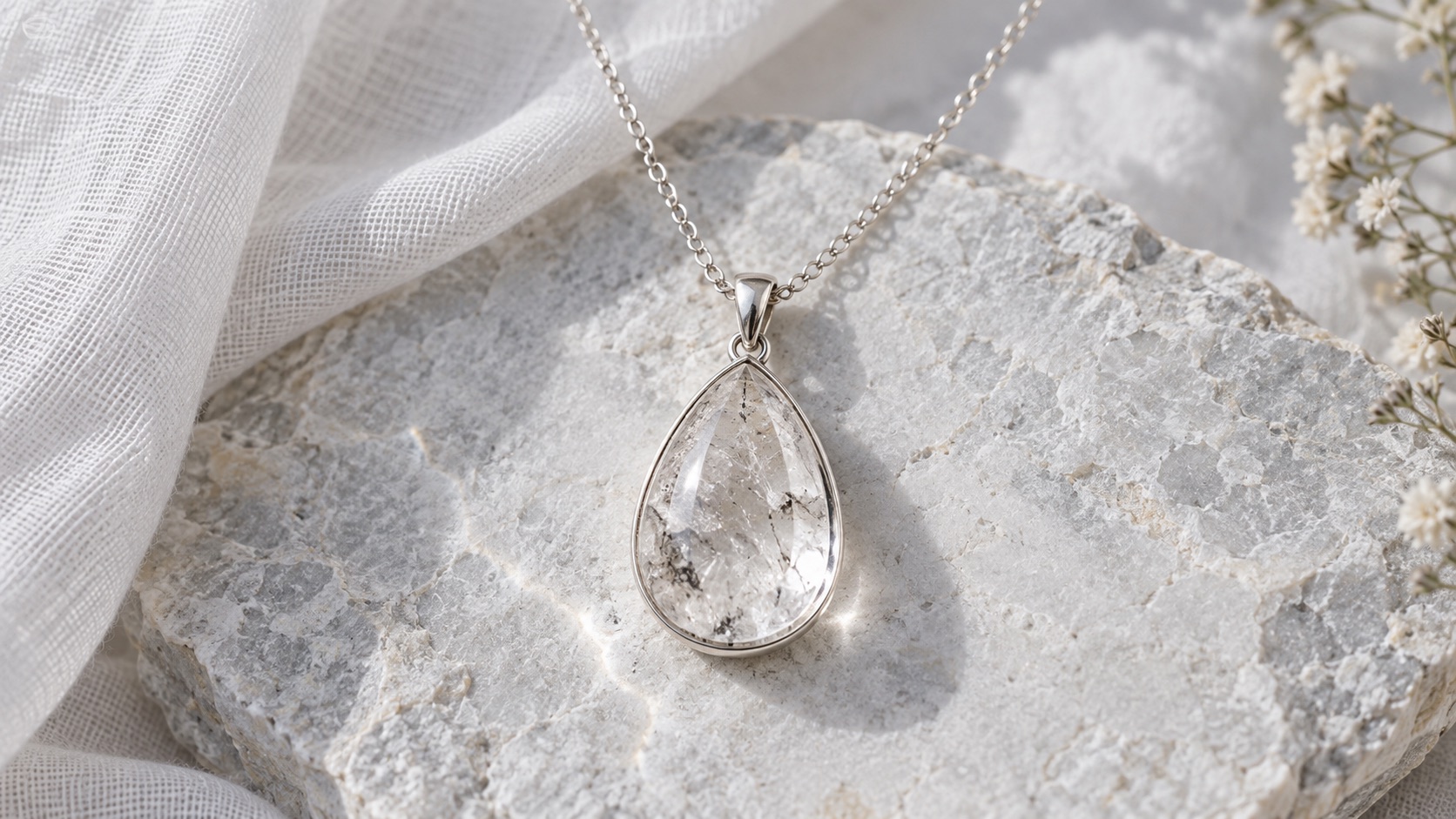
A crystal pendant necklace changes continuously with light, clothing, and movement. Transparency can reveal internal veils, fine fractures, clouds, or mineral-like inclusions, while a smoky or colored crystal can create more visual definition. Because dramatic lighting easily exaggerates brilliance, buyers should evaluate material naming, treatment, setting, chain, weight, and everyday appearance together.
This guide explains how to assess crystal pendant necklace through material identity, craftsmanship, proportion, photography, responsible claims, styling, care, and long-term value. The aim is not to prescribe taste, but to make the details behind a confident purchase easier to see.
What to Look for First
Begin with the complete description rather than the mood of the photograph. The seller should name the stone or crystal, metal, stringing or chain material, dimensions, closure, and any relevant treatment. Natural describes geological origin; it does not mean that cutting, polishing, drilling, heating, dyeing, coating, filling, or stabilization never occurred.
Treatment is not automatically negative, and untreated material is not automatically suitable for every design. What matters is disclosure, durability, appropriate care, and a fair relationship between description and price.
Material Identity and Honest Language
Trade names can be useful, but they should not obscure what an object contains. Terms such as genuine, premium, healing, or artisan do not identify a mineral on their own. Ask for precise material names and clarification when a listing blends natural stone, glass, composite material, or laboratory-grown components.
The Federal Trade Commission Jewelry Guides address disclosure of gemstone treatments and manufactured alternatives in the United States. The Gemological Institute of America also outlines common treatments and care implications. Photographs and home tests cannot establish every process.
Natural Variation Versus Damage
Color zoning, veining, banding, clouds, and inclusions may belong to the natural character of a stone. Sharp chips, open fractures, rough drill holes, peeling coatings, weak links, or a finish that catches fabric are workmanship or condition concerns. Useful close photographs help distinguish the two.
Matching is a design choice. Closely related pieces create a formal rhythm, while deliberate contrast can emphasize natural variation. The sequence should still feel balanced rather than random.
Craftsmanship You Can See
Inspect alignment, spacing, polish, edges, joins, and the relationship between stone weight and its support. Clasps should open cleanly and close securely. Wire, thread, elastic, chain, and jump rings should be selected for the scale of the piece, not hidden behind decorative language.
Handmade does not mean perfectly uniform. It should mean that variation has been handled with intention and that finishing decisions support comfort and durability.
Price, Documentation, and Lasting Value
Price can reflect material rarity, labor, matching, finishing, original design, small-scale production, and service, but a high price is not evidence by itself. Compare objects with similar dimensions and construction rather than treating every stone of the same name as equivalent. A carefully composed piece made from modest material may offer stronger design and workmanship than a poorly finished piece built around a more expensive trade name.
Keep the invoice, material description, treatment disclosure, measurements, and care instructions. For higher-value stones, ask what an accompanying report covers and whether it identifies a loose component or the finished object. Documentation should be read for its actual scope, not treated as a general certificate of beauty, ethics, durability, or future value.
Repairability Matters
Jewelry is made of parts that age at different rates. Thread can stretch, elastic can fatigue, chain links can open, clasps can wear, and polished surfaces can collect small marks. This does not automatically mean the materials were poor. It means maintenance should be considered before a failure causes loss.
Ask whether the maker or seller offers restringing, clasp replacement, adjustment, or referral to a qualified jeweler. Preserve spare beads and original findings when they are supplied. Repairability adds practical value because it allows well-chosen stones and meaningful components to remain in use instead of turning a minor construction issue into the end of the piece.
When comparing crystal pendant necklace, favor complete information over persuasive adjectives. The best crystal pendant necklace should remain understandable after the styled photography and promotional language are set aside.
Clarity Is Not the Same as Quality
Crystal may contain veils, needles, clouds, color zones, and healed fractures. These can be visually compelling and consistent with natural formation, but they are not proof of origin. Perfect clarity can also occur in manufactured material.
Look for a deliberate cut, stable surfaces, good polish, and disclosure that matches the price rather than treating every inclusion as evidence.
Check How the Crystal Is Held
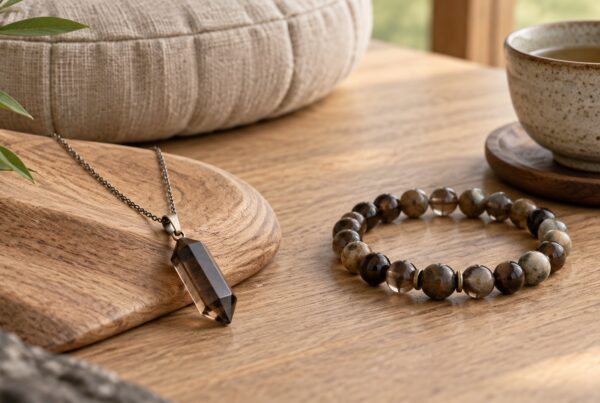
Transparent stones make setting details easy to see. Prongs should meet the stone evenly, bezels should follow the outline without gaps, and drilled pendants should have smooth holes away from fragile edges. Adhesive should not be visible or used to conceal weak construction.
The bail and chain must support both the weight and the movement of the pendant.
Evaluate Light in Ordinary Conditions
Backlighting can make a crystal appear almost luminous, but most wear happens in softer indoor or outdoor light. Seek photographs against light and dark fabric, in neutral daylight, and on a person for scale.
This gives a more accurate sense of transparency, undertone, inclusions, and whether the pendant remains legible against a wardrobe.
Evaluate Photographs Online
Look for neutral daylight, close details, more than one angle, a scale reference, and a view of the closure or back. Dramatic backlighting can make transparent material appear brighter and more saturated than it will indoors. Confirm whether the pictured piece is exact or representative.
Read dimensions rather than judging scale from a styled scene. Screens also reproduce color differently, so a responsible return policy remains useful even when photography is careful.
Comfort, Proportion, and Wear
Weight distribution affects comfort as much as total weight. A necklace should sit without twisting, pulling at the nape, or tipping a focal element forward. Bracelet beads should not press into the wrist or interfere with hand movement. Check dimensions against a piece already worn comfortably.
Consider skin sensitivity and ask about all metal components, including small findings. A beautiful object is more likely to become meaningful when it can be worn without constant adjustment.
Styling with Restraint
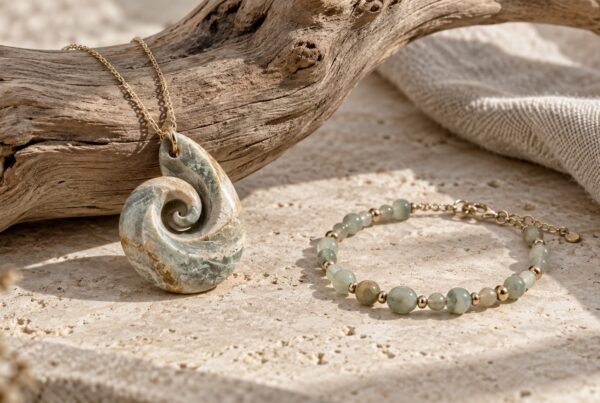
Let natural material provide the detail. Clear and smoky crystal complements tailored neutrals; green and earth tones work naturally with linen, denim, wool, and warm leather. A single piece creates a quiet focal point, while layering works best when one element such as scale, finish, or metal tone repeats.
View the piece beside the clothing and jewelry it will actually accompany. Daylight can reveal undertones that warm product lighting softens, and a quick photograph often clarifies proportion better than memory.
Responsible Meaning and Symbolism
Gemstones have accumulated cultural and personal associations, but these should be presented as traditions or interpretations rather than measurable guarantees. A piece may become a reminder of a person, place, value, or daily intention without claiming to heal, protect, attract wealth, or alter destiny.
Respect named religious objects and practices. General jewelry should not be assigned a sacred identity merely to make it sound more significant.
Care and Storage
Follow guidance for the exact stone, treatment, metal, and construction. As a cautious routine, remove jewelry before bathing, swimming, exercise, sleep, or household cleaning. Apply fragrance and lotion first, allow them to dry, and then put the piece on.
Wipe gently with a soft dry cloth and store separately so harder materials and metal edges do not scratch neighboring pieces. Avoid ultrasonic or steam cleaning unless a qualified professional confirms that every component can tolerate it.
A Practical Buying Checklist
- The material is named precisely.
- Known treatments and manufactured components are disclosed.
- Dimensions, weight, and closure are clear.
- Photographs show ordinary light and useful detail.
- Construction suits the weight of the design.
- Claims remain accurate and proportionate.
- Care, returns, and repair options are explained.
Chain, Cord, and Closure Compatibility
A pendant and its support should be assessed as one system. Fine chains can look elegant but may be unsuitable for a heavy stone; thick cords may visually overwhelm a small focal piece. Check metal type, link style, cord material, thickness, and the relationship between the clasp and bail. The clasp must pass through the bail if the pendant is intended to move between chains.
Length changes both appearance and movement. A pendant at the collarbone interacts with shirt openings and skin, while a longer necklace may rest against fabric and swing more during walking. Adjustable extenders add flexibility, but their links and finishing should match the rest of the construction. For cords, inspect sliding knots or end caps for smooth operation and secure attachment.
Metal Details and Skin Considerations
Descriptions should identify the metal throughout the piece, not only the visible setting. A sterling silver bezel may still be paired with plated chain, base-metal jump rings, solder, or an alloyed clasp. This matters for color consistency, maintenance, durability, and sensitivity. Ask what lies beneath plating and how the finish is expected to age.
No metal can be assumed comfortable for every person. If the wearer has a known sensitivity, seek complete component information and discuss uncertainty with the seller. Keep perfume, lotion, perspiration, and household chemicals away from both metal and stone where possible, because residues can affect surfaces and make cleaning more difficult.
How to Compare Price Fairly
Compare pieces with similar scale, material, treatment, setting, metal, labor, and service. Two pendants sold under the same stone name may differ greatly in weight, color, pattern, cutting, stability, and construction. Conversely, a beautiful but common material can become an excellent piece through intelligent selection and precise craft.
Price should not be treated as proof of authenticity, rarity, ethical sourcing, or future value. Look for information that can be evaluated: measurements, weight, treatment disclosure, close photographs, maker process, documentation, return terms, and repair support. A clear explanation is part of premium value because it lets the buyer understand what is being purchased.
Documentation and Questions to Keep
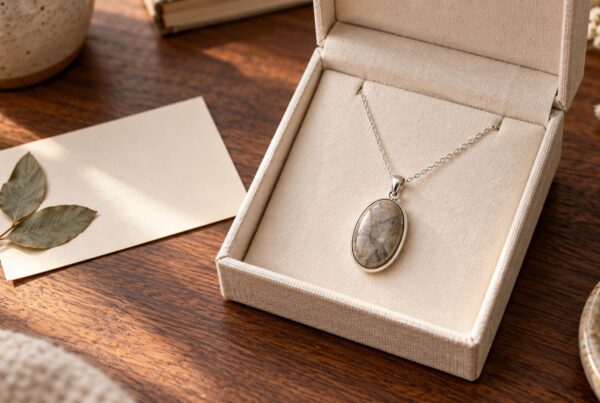
Save the product description, invoice, material card, dimensions, treatment information, and care guidance. Online listings can change after purchase, so a dated record helps with future repair, insurance, gifting, or resale. If a report accompanies a higher-value stone, read what it actually identifies and whether it applies to the loose gemstone or the finished piece.
Useful questions include: Is the photographed item exact? What treatments are known? What are the pendant and chain dimensions? What metals touch the skin? Can the piece be repaired or resized? What cleaning methods should be avoided? Clear answers reduce uncertainty and often reveal more about quality than a long list of promotional adjectives.
Receiving and Inspecting the Piece
Open valuable deliveries carefully and retain packaging until the piece has been inspected. Compare it with the listing in neutral daylight. Check color, dimensions, stone security, chain movement, clasp operation, sharp edges, and whether the pendant hangs as expected. Natural variation may explain pattern differences, but it should not excuse undisclosed damage or materially different construction.
Try the jewelry over the clothing and at the length where it will actually be worn. Move naturally, bend, and sit to see whether the pendant turns, catches, or feels disproportionately heavy. Raise concerns within the seller’s return window rather than wearing the piece extensively before deciding.
Frequently Asked Questions
Does natural mean untreated?
No. Natural refers to origin. A natural gemstone may still be heated, dyed, filled, coated, stabilized, or otherwise processed, and relevant treatments should be disclosed.
Can a photograph prove authenticity?
No. Images help assess color, finish, variation, and construction, but they cannot establish every material identity or treatment. Documentation matters more as price and rarity increase.
Is natural variation a defect?
Not by itself. Inclusions and color differences can be normal. Chips, unstable fractures, damaged surfaces, and weak construction are separate concerns.
How should the jewelry be cleaned?
Use the instructions for the exact materials. A soft dry cloth and separate storage are cautious defaults; chemicals, steam, and ultrasonic cleaning may be unsuitable.
What makes the piece meaningful?
Meaning can come from material, craftsmanship, memory, gifting, or repeated personal use. It does not require an unverifiable supernatural claim.
Final Perspective
The strongest crystal pendant necklace combines clear material information, considered design, comfortable wear, and care that supports a long life. Choose the piece that remains convincing in ordinary light and connects naturally with the person who will wear it. In that sense, crystal pendant necklace is best judged by details that can be understood, not promises that cannot be verified.