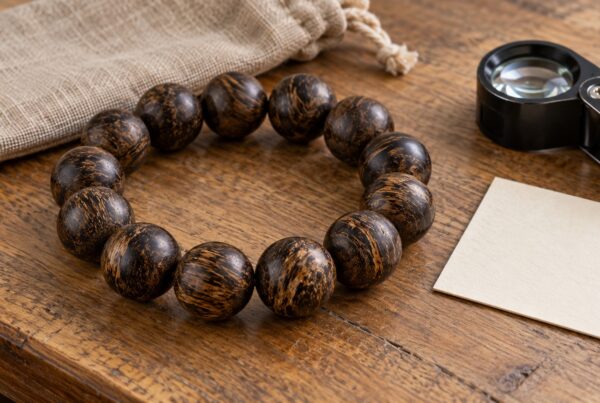
An agarwood bracelet is valued for the relationship between wood, resin, grain, touch, and aroma. Agarwood forms when certain Aquilaria and related trees produce resinous heartwood in response to injury or biological processes. Quality cannot be established by dark color, strong scent, weight, or a simple water test alone. Reliable selection requires provenance, processing disclosure, careful bead making, comfortable fit, and realistic expectations.

This guide examines agarwood bracelet through material identity, scent, resin, grain, bead construction, fit, sourcing, styling, care, and responsible symbolic language. It avoids laboratory-like certainty from home tests and does not attribute guaranteed healing, luck, protection, or spiritual effects to the wood.
What Agarwood Is
Agarwood is resin-rich wood associated mainly with trees in the genus Aquilaria and some related taxa. The tree responds to injury and biological activity by depositing aromatic resin over time. The result can vary within one tree and between regions, species, formation methods, harvests, and processed pieces.
A bracelet is not made from a single standardized substance. Pale wood, dark resin lines, density, oiliness, and aroma can differ from bead to bead. A responsible seller explains what is known and avoids presenting every visual trait as proof of a grade.
Natural, Cultivated, and Induced Material
Agarwood may come from wild or cultivated trees, and resin formation may occur naturally or be encouraged through managed inoculation or wounding. Cultivated or induced material is not automatically inferior; quality depends on resin development, harvesting, processing, and the intended use.
Ask for specific, proportionate provenance rather than broad phrases such as ancient, wild, or rare. Claims about geographic origin and harvest method should be supported, especially when they materially affect price.
Why Color Cannot Prove Authenticity
Dark appearance may reflect resin, species, age, oxidation, heat, oil, dye, stain, coating, or photography. Pale material can still be genuine wood, while very dark beads are not automatically high grade. Compare color in neutral light and inspect multiple surfaces rather than relying on one dramatic image.
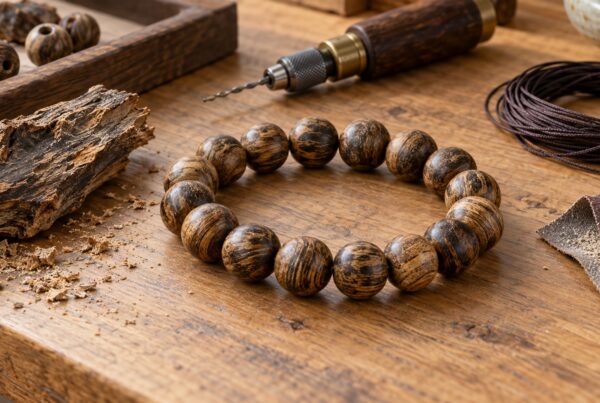
Look for grain that continues naturally around the bead, but remember that visual inspection alone cannot settle identity or treatment. Ask whether color, fragrance, oil, coating, stabilization, or heat has been added.
Understanding Aroma
Agarwood aroma can be woody, sweet, balsamic, warm, dry, green, leathery, or subtly smoky, and perception varies between people. Temperature, humidity, skin oils, storage, age, and previous handling also influence how a bracelet smells.
Stronger is not always better. Added fragrance may smell immediate and uniform, while natural aroma can be quieter and change with warmth. A product description should avoid promising a permanent intensity and should disclose applied scent or oil.
Density and the Limits of Water Tests
Resin can increase density, but whether a bead floats or sinks also depends on species, moisture, bead size, drilling, internal structure, coatings, and processing. A water test is not a complete authenticity or quality test and may damage cord or alter the surface.
Do not soak a finished bracelet to evaluate it. Reliable assessment combines provenance, physical examination, seller transparency, and specialist testing when the value justifies it.
Grain, Resin, and Natural Variation
Observe longitudinal grain, pores, resin streaks, tonal changes, and how these features move around each bead. Variation can be attractive and consistent with natural wood. Matching may be close for a formal strand or intentionally varied for a more organic rhythm.
Cracks, splintering drill holes, sticky coatings, peeling finish, or sharp edges are different from natural pattern. Close photographs should show front, back, sides, and holes rather than only the darkest faces.
Bead Shaping and Polish
Round beads should feel balanced, with smooth surfaces and centered holes. Slight variation can reflect hand finishing, but it should not create rough contact or uneven tension. Excessively glossy surfaces may conceal grain or suggest a heavy coating, though polish alone does not establish treatment.
Matte and satin finishes often preserve tactile wood character. Whatever the finish, ask what was applied and how it should be maintained.
Drilling and Stringing
Drill holes should be clean, appropriately sized, and free from splinters that abrade elastic or cord. The stringing material must suit bead weight and hole diameter. Knots, concealed joins, and any spacers should be secure without forcing beads tightly against one another.
Stretch bracelets should roll over the hand rather than being pulled at one point. Corded designs may be adjustable or fixed; both need tidy finishing and a practical repair path.
How to Choose the Right Size
Measure the wrist where the bracelet will sit, then check whether the seller lists inner circumference, bracelet length, or intended wrist size. Larger beads reduce interior space, so two strands with the same outer length can fit differently.
A close fit feels composed but should not leave deep pressure marks. A relaxed fit allows movement, yet excessive movement can cause impact and cord fatigue. Compare measurements with a bracelet already worn comfortably.
Comfort and Everyday Wear
Agarwood is often lighter than stone, which can make substantial beads comfortable. Consider bead diameter, desk work, sleeves, watches, moisture, and how frequently the bracelet must be removed. Wooden beads should not be worn so tightly that perspiration remains trapped against them.
If metal spacers are included, identify their composition and consider skin sensitivity. Mixed materials may also require different care.
Responsible Sourcing and Conservation
Aquilaria species are subject to international conservation controls, including CITES listings. Requirements vary by species, product, origin, and border, so sellers handling international trade should understand applicable documentation and regulations.
Prefer traceable cultivated supply, realistic origin language, and sellers willing to explain sourcing. Sustainability should be supported by information rather than used as an unqualified marketing word.
Meaning Without Exaggeration
Agarwood has important roles in religious, aromatic, artistic, and hospitality traditions across regions. A bracelet may remind a wearer of calm attention, heritage, craft, or a personal intention. Those meanings deserve context and respect.
Do not convert tradition into guaranteed claims that the bracelet heals illness, attracts wealth, blocks misfortune, or changes destiny. The object can support a chosen ritual without controlling outcomes.
Using the Bracelet as a Mindful Cue
Touch one bead before beginning a task, put on the bracelet after a morning pause, or remove it when closing the day. The repetition can help mark transitions because the wearer gives it consistent meaning.
Keep the practice simple. Scent and touch may be pleasant sensory cues, but the bracelet is not a medical treatment or substitute for professional support.
Styling Agarwood
Warm brown wood works naturally with linen, cotton, denim, wool, brushed metal, and muted colors. Wear one strand to keep grain visible, or layer with a watch or plain cord while leaving room to reduce rubbing.
Avoid placing wood beads against sharp metal edges or harder stone bracelets that can abrade the finish. Restraint usually allows the material’s pattern to remain the focus.
Cleaning and Storage
Wipe the bracelet gently with a soft dry cloth after wear. Remove it before bathing, swimming, exercise, household cleaning, and applying fragrance or lotion. Avoid soaking, steam, ultrasonic cleaning, alcohol, detergent, and unverified oils.
Store separately in a breathable pouch or box away from direct sun, heaters, extreme humidity, and strong competing odors. Follow the maker’s guidance for the exact finish and cord.
How Aroma May Change
Natural aroma can become quieter with air exposure or seem stronger with body warmth. Skin oils and environmental scents may alter perception. This change does not alone prove that a bracelet is fake or damaged.
Do not apply perfume or essential oil to restore scent unless the seller confirms that the bracelet was designed for it. Added products can stain wood, mask its character, and complicate later evaluation.
Repair and Restringing
Inspect elastic, knots, and cord periodically. Restring before failure when elasticity weakens, fibers fray, or knots loosen. Keep spare beads and original components when provided.
A skilled repairer should preserve bead order, avoid enlarging holes unnecessarily, and use support appropriate to the wood. Maintenance can extend the life of well-made beads for many years.
Evaluate Evidence, Reports, and Seller Language
No single photograph, aroma description, water test, or trade adjective can fully identify agarwood or establish a universal grade. If a laboratory report is offered, read what sample was examined, what method was used, who issued it, and whether the conclusion applies to the finished bracelet. A document for loose wood should not automatically be treated as proof for every bead in a later strand.
Seller knowledge appears in proportionate language. Trustworthy descriptions distinguish confirmed facts from opinion, name uncertainty when necessary, and answer questions about treatments and origin directly. Terms such as museum grade, supreme, ancient, medicinal, or investment quality need evidence; they should not become substitutes for measurable dimensions, clear images, sourcing records, and a return policy.
Humidity, Climate, and Travel
Wood responds to its environment. Rapid movement between very dry air, high humidity, direct heat, and air conditioning can affect surface feel, cord tension, and the risk of checking or warping. Keep the bracelet away from radiators, hot vehicles, direct sun, and sealed damp containers. Allow it to adjust gradually when traveling between sharply different climates.
International travel may also involve wildlife-trade documentation depending on species, origin, form, destination, and current rules. Do not assume that a finished bracelet is exempt from every requirement. Ask the seller for accurate botanical and trade information, retain receipts and permits, and check official authorities before crossing borders with valuable or documented material.
Choosing Agarwood as a Gift
Begin with the recipient’s wrist size, sensitivity to scent, preferred bead scale, and daily habits. Aroma is highly personal; a subtle dry profile may suit one person while another prefers a warmer resinous character. Avoid presenting the gift with guaranteed spiritual or health claims. A short note about craft, material, or shared meaning is more respectful and more personal.
Include the seller’s material description, sourcing information, care instructions, and exchange option. Presentation should protect the wood without trapping moisture or strong external fragrance. A breathable pouch inside a structured box is often more useful than elaborate scented packaging that masks the bracelet’s own character.
Inspecting the Bracelet on Arrival
Examine the strand in neutral daylight before wearing it extensively. Compare bead diameter, inner circumference, grain, color, finish, cord, and aroma with the listing. Roll each bead gently between the fingers to notice rough holes, cracks, sticky coatings, or uneven shapes. Confirm that knots and joins remain secure and that the strand does not place excessive tension on one point.
Natural variation is expected, particularly when a listing uses representative photographs, but the delivered bracelet should still match the stated range and construction. Raise material differences, damage, added scent, or sizing problems within the return window. Keep packaging and records until the inspection is complete.
Questions to Ask Before Buying
- What botanical and geographic information is known?
- Is the material cultivated, wild, or of unspecified origin?
- Was resin formation induced or naturally occurring?
- Were color, fragrance, oil, coating, heat, or stabilization added?
- What are bead diameter, inner circumference, and cord material?
- Are the photographs of the exact bracelet?
- What sourcing or trade documentation is available?
- What care and repair support is offered?
Frequently Asked Questions
Should genuine agarwood sink in water?
Not necessarily. Density varies, and soaking a finished bracelet can cause harm. Floating or sinking is not a complete authenticity test.
Should the scent always be strong?
No. Natural aroma can be subtle and may change with temperature, humidity, handling, and storage. Strength alone does not establish quality.
Can dark color prove high resin content?
No. Color may have several causes, including treatment and photography. Seek disclosure and examine grain, scent, construction, and provenance together.
Can it get wet?
It is safest to keep it dry. Repeated moisture may affect wood, finish, cord, and aroma. Remove it before bathing, swimming, or exercise.
Does an agarwood bracelet guarantee spiritual benefits?
No. It may hold cultural or personal meaning and serve as a sensory ritual cue, but it cannot guarantee healing, protection, luck, or other outcomes.
Final Perspective
A well-chosen agarwood bracelet combines transparent material information, expressive natural grain, nuanced aroma, careful bead making, comfortable fit, responsible sourcing, and practical aftercare. Choose the strand that can be understood in ordinary light and enjoyed without unsupported promises. Its lasting value comes from material, craft, context, and the attention brought to wearing it.